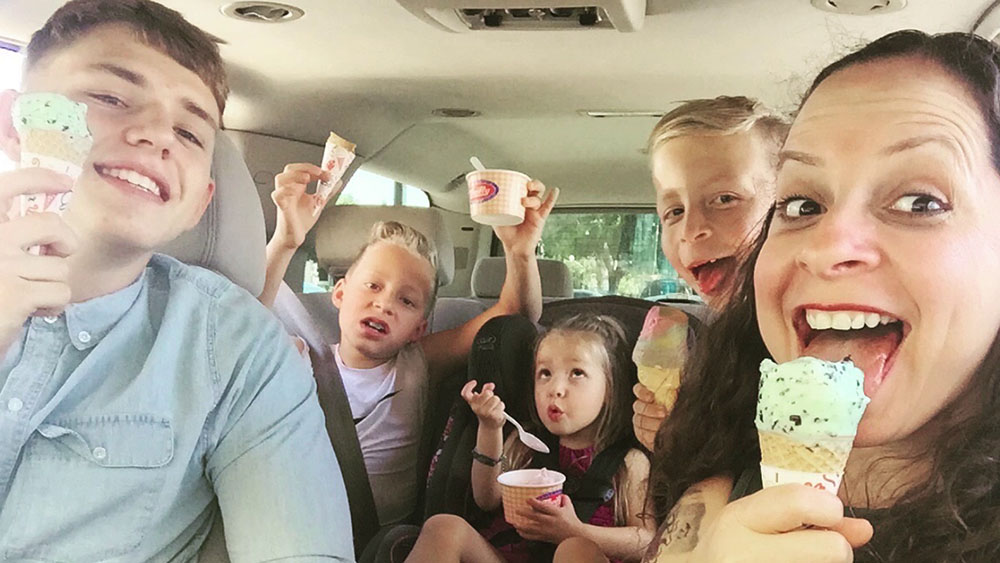
Here are our top secrets for creating a powerful and emotional memorial video
A memorial video should do more than show pictures on a screen. It should help people remember, feel, laugh, cry, and reconnect with the person they came to honor.
The best tribute videos are not simply collections of photos set to music. They are carefully shaped stories that capture a person's personality, relationships, passions, and presence.
After years of creating memorial videos for families, one thing becomes clear: the most powerful videos are not always the ones with the most photos, the most effects, or the biggest budget. They are the ones made with intention.
A great memorial video has rhythm. It has emotional movement. It gives the audience space to reflect. It makes old memories feel alive again. Most importantly, it feels like the person it is about.
1. Start With the Person, Not the Photos
The most common mistake families make is starting with a pile of photos and trying to turn them into a video immediately. That approach can work for a basic slideshow, but it rarely creates a strong emotional tribute.
Before choosing the final photos, start by asking a better question: who was this person? Were they funny, quiet, adventurous, elegant, spiritual, artistic, hardworking, stubborn, generous, playful, or sentimental? What did they love? What did people love most about them?
A memorial video becomes more powerful when it reflects the subject's personality. A tribute for a jazz musician should not feel the same as a tribute for a surfer, a teacher, a pilot, a gardener, or a grandmother who hosted every holiday dinner.
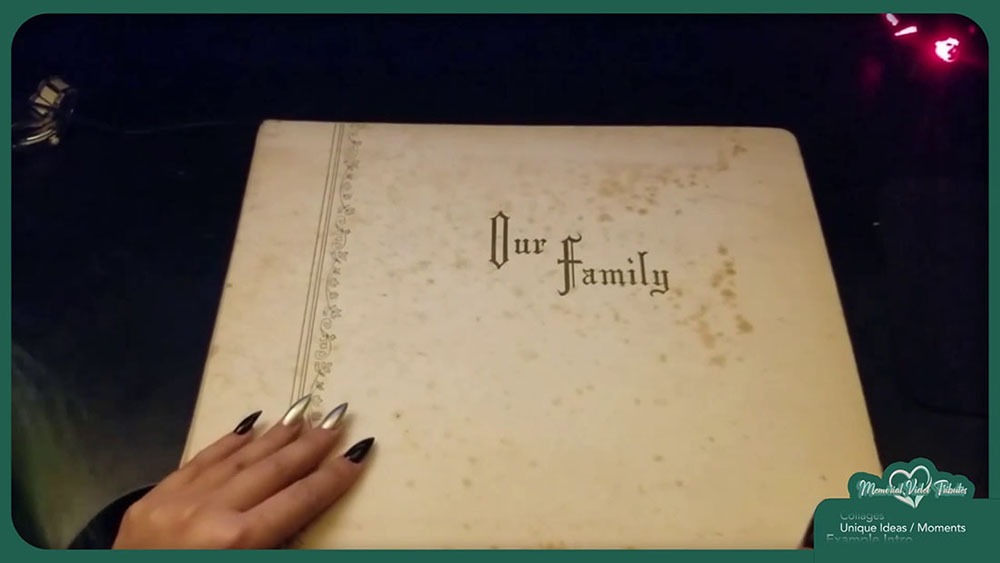
Look for personal signals
- Favorite places, colors, songs, flowers, objects, and hobbies.
- Family recipes, handwritten notes, military photos, old letters, or home movies.
- The stories people tell first when they remember the person.
Choose the right structure
- Chronology can work, but it is not the only option.
- Some tributes are stronger when grouped by family, friendship, work, faith, hobbies, travel, and legacy.
- The goal is to show what made the person unmistakably themselves.
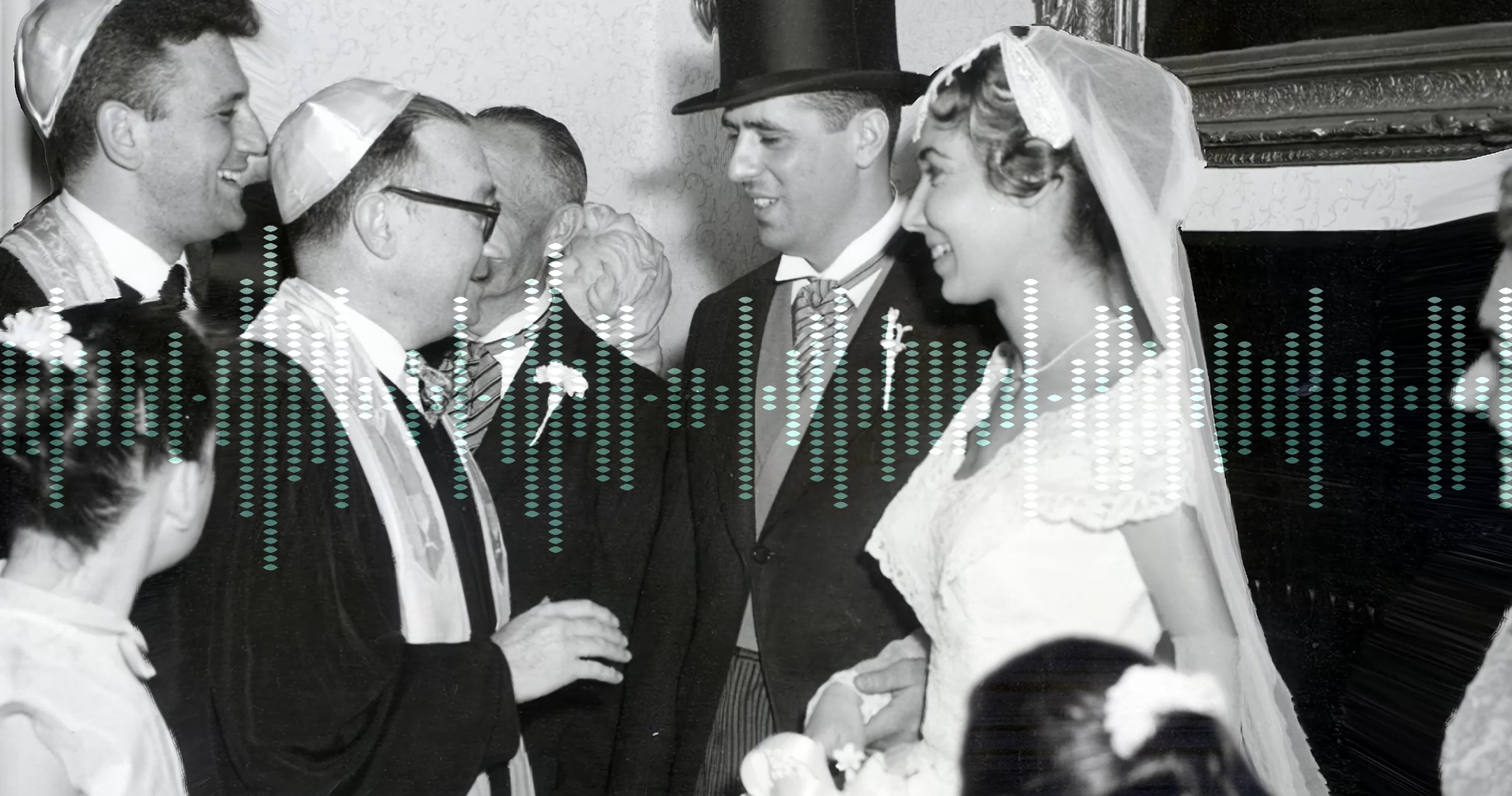
2. Build Around Music, Not Just Over It
Music is the emotional foundation of a memorial video. It controls the pace, tone, and feeling of the entire piece. A beautiful song can make simple photos feel cinematic. The wrong song can make even the best images feel disconnected.
Lyrics matter, but they are not the only consideration. The tempo, mood, instrumentation, structure, and emotional arc of the song matter just as much. A favorite song of the loved one may be the most meaningful choice even if the lyrics are not obviously about remembrance.
One of the biggest secrets is that the song should be edited to fit the video, not simply faded out when the photos are over. Custom audio editing can trim sections, extend intros, loop instrumental passages, adjust volume, and create transitions between songs so the video feels seamless.
When the music is handled correctly, viewers may not notice the editing. They simply feel that the video flows.
3. Use Fewer Photos More Intentionally
When families begin gathering media, they often worry about having enough photos. But more photos do not automatically make a better video. Too many images can make a tribute feel rushed, repetitive, or emotionally flat.
A strong memorial video gives important photos time to breathe. Some images deserve only a few seconds. Others deserve a longer moment: a wedding portrait, a military photo, a family reunion, a parent holding a child, a loved one looking directly into the camera, or a rare video clip.
Think in terms of emotional value, not quantity. The video should include the people and memories that matter, but it should not feel like every image was included only because it existed.
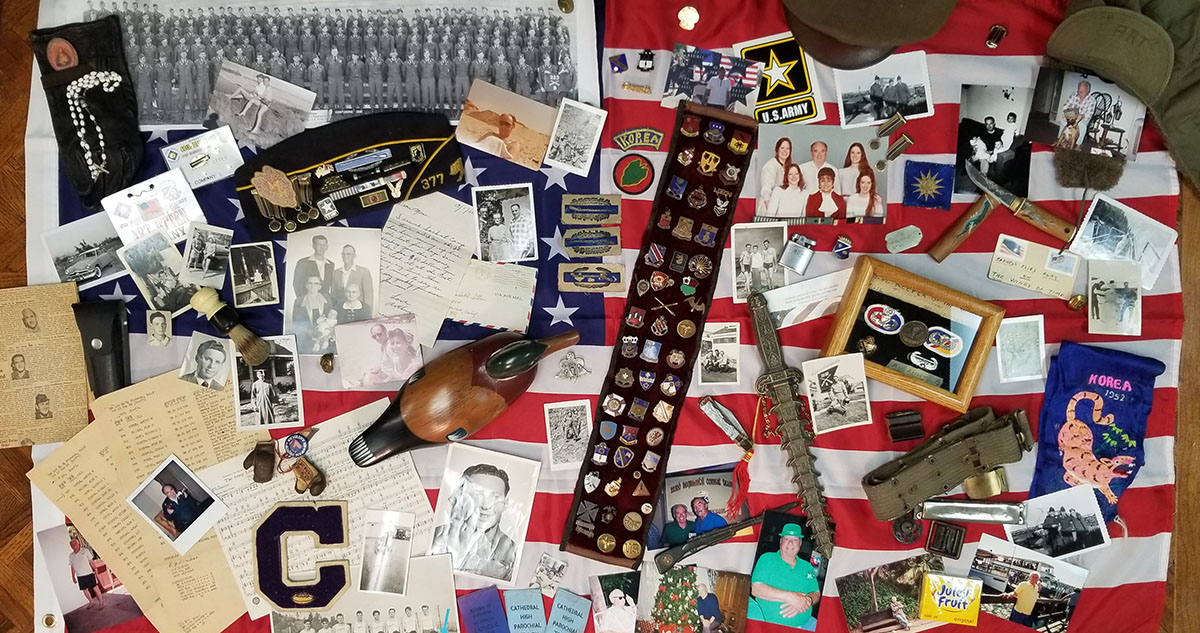
If you have too many photos
- Sort them into childhood, parents, siblings, marriage, children, grandchildren, friends, career, hobbies, travel, holidays, and recent years.
- Look for repeated moments and choose the strongest version.
- Let the most emotional images stay on screen longer.
If you have too few photos
- Use high-resolution scanning, careful restoration, and slow camera movement.
- Build animated collages or subtle depth effects from limited media.
- Use thoughtful pacing so a small collection still feels rich.
4. Make the Intro and Outro Count
The intro and outro are often the most important parts of the video. They frame the entire experience. The intro tells the audience, "This is not just a slideshow. This is a tribute." The outro gives the audience a final emotional moment and a sense of closure.
A strong intro might use a favorite portrait, a name, dates, a quote, a handwritten signature, a voice recording, a favorite place, or a slow-moving collage of meaningful objects. What matters is that it feels specific to the person.
The outro should be handled with even more care. This is the final image people sit with. It may include a closing message, a favorite quote, a peaceful portrait, a final wave from a video clip, or a slow fade to a meaningful location.
A powerful ending does not tell people what to feel. It gives them space to feel it.
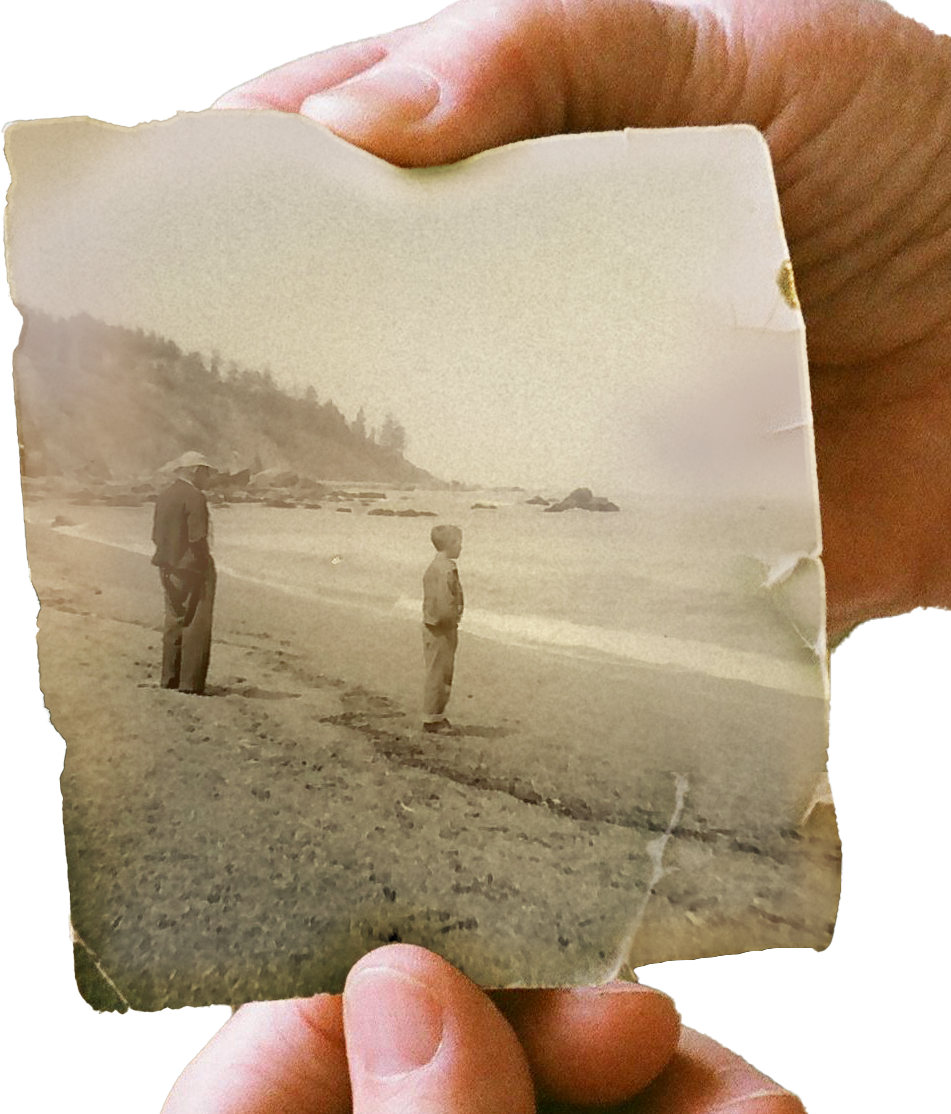
5. Restore, Animate, and Enhance Without Overdoing It
Modern tools can repair damaged photos, color-correct faded images, stabilize old video, improve low-resolution media, digitize tapes and DVDs, and add gentle movement to still portraits. These enhancements can completely change the emotional impact of a memorial video, but restraint is what keeps the tribute feeling sincere.
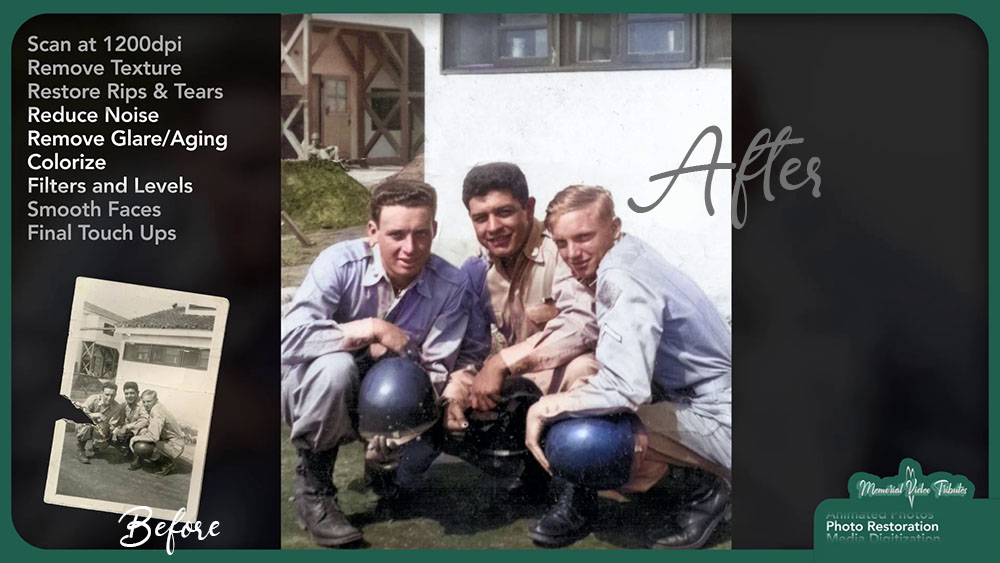
Photo Restoration
Torn, faded, scratched, or low-contrast photos can become clear and beautiful again without losing their history.
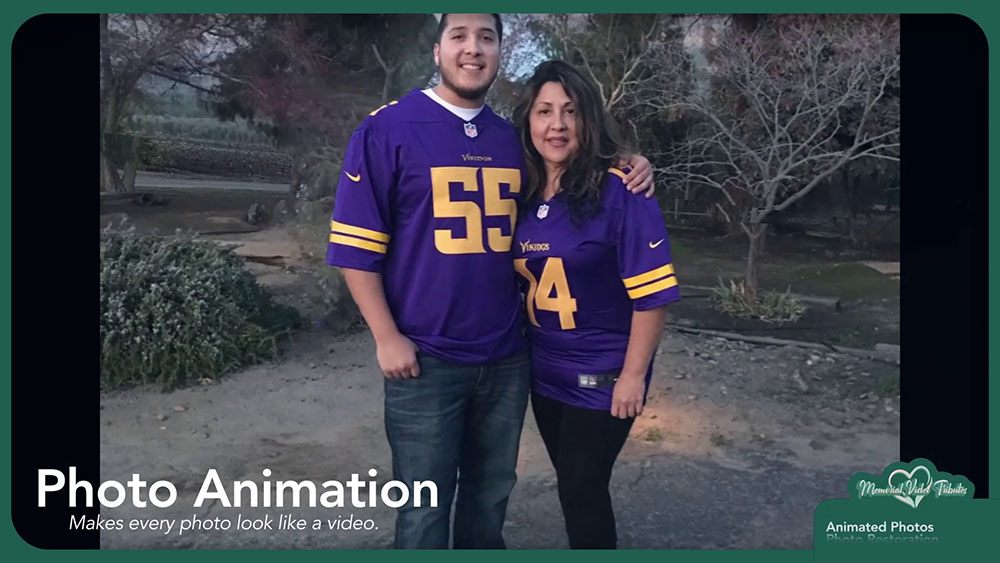
Gentle Animation
Slow movement, layered depth, and subtle parallax can help a still image feel alive on screen.
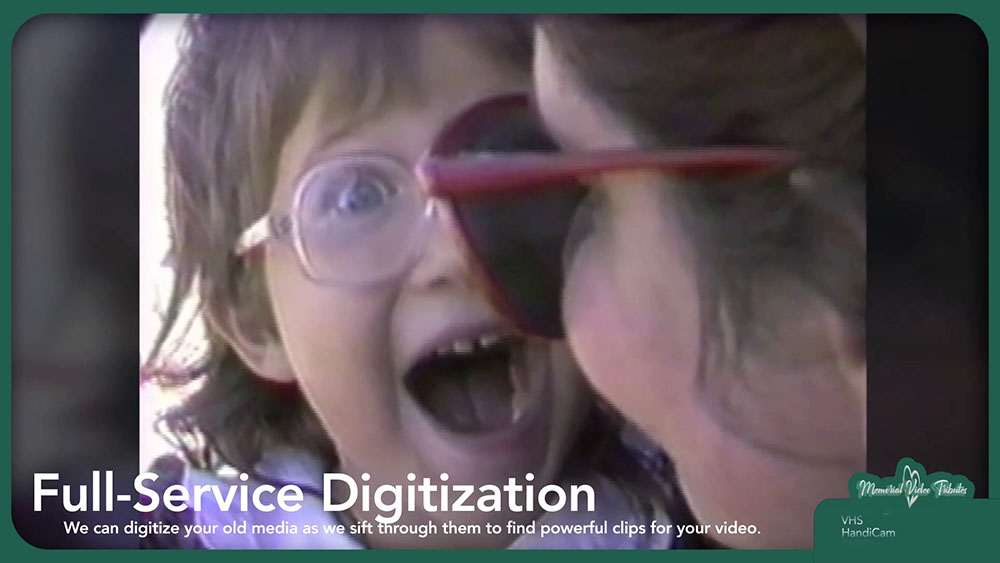
Old Media Digitization
VHS, HandiCam footage, 8mm film, cassettes, DVDs, and old tapes can be preserved and woven into the tribute.
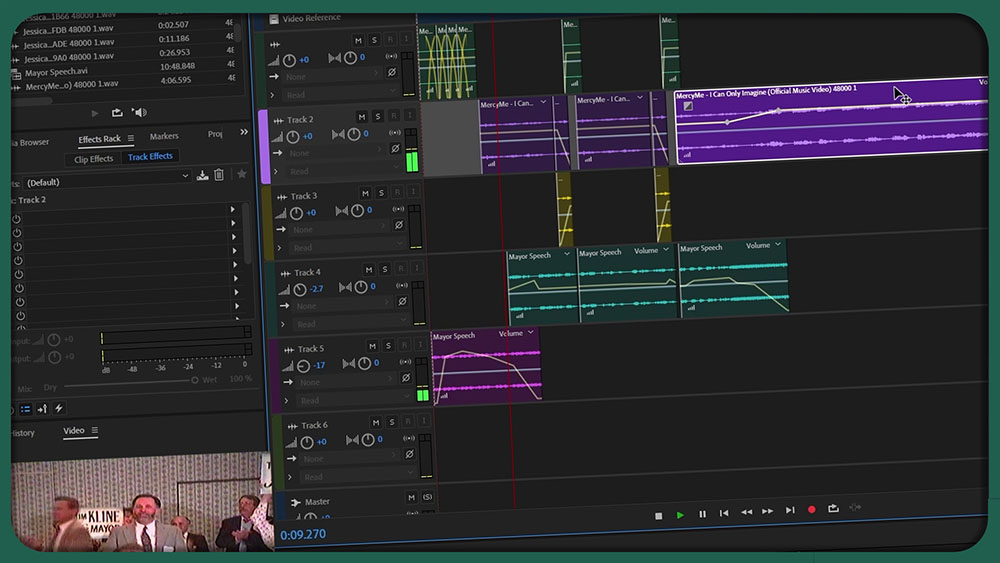
Audio Cleanup
Music, voice clips, and video audio can be shaped so the tribute feels smooth, balanced, and emotionally complete.
The Real Secret: Careful Choices
A powerful memorial video is made from hundreds of careful choices. The technology matters. Editing skill matters. Audio, restoration, animation, and design all matter. But the heart of the project is always the same: honoring someone's life in a way that feels true.
- Which photo comes first? The opening image sets the emotional tone for everything that follows.
- Which song supports each section? Music should guide the feeling instead of sitting underneath it.
- Which image deserves more time? Some memories need space before the next photo appears.
- Which old photo should be restored? A repaired image can carry more emotion than a dozen ordinary ones.
- Which moment needs silence? Not every powerful moment needs more movement or sound.
- Which clip belongs at the end? The final image should leave people with peace, presence, and closure.
The Difference Between a Slideshow and a Tribute
A great memorial video should help the audience remember more than events. It should help them remember personality, voice, humor, love, and presence. It should feel like a keepsake, not just something made for a service.
When done well, a memorial video becomes one of the most meaningful pieces of family history a person can leave behind. It can be shared with children, grandchildren, friends, and relatives who could not attend the service. It can be watched years later and still bring the person's memory back into the room.
A slideshow shows what happened. A tribute helps people remember who they loved.
Create a meaningful tribute